|
|
DRUGS – FACTS
March – 2007 |
The report of the RSA Commission on Illegal Drugs
[ View report here ]
This report, in its chapter on ‘Reducing the demand for drugs: attitudes, awareness and behaviour’ the report states:
‘Tailoring the message…Lifeline’s leaflets are graphic and uncompromising enough to have prompted questions in Parliament: but they take the most basic and essential public health information to the people who are unlikely to come across it in any other way, in a form that is credible to them.’
In 2005 Michael Linnell explained the process:
HOW TO MAKE A LIFELINE PUBLICATION
‘Since 1987 when we first produced ‘Smack in the Eye’ Lifeline Publications have published hundreds of drug related materials that have achieved a worldwide reputation for excellence and innovation. Although we have had a one or two critics along the way, many of the approaches we pioneered and were damned for are now standard practice in the field. One of the things that still constantly amaze us is people’s surprise when they find out how much research goes into producing a publication, they must just assumed that we make them up.
Our publications are underpinned by classical health education and communication theory and built on research to ensure that the communication is as effective as we can make it. They are aimed at specific target audiences, which are based on similarities of drug use, geography, age, lifestyle etc. These are identified by perceived need and further refined by the research process. Our tiny team of designers and writers work directly with the target audience, as we believe this is the most effective (if not the only) method of working. Qualitative research identifies problems and risks together with appropriate messages and styles that will be understood and found creditable by that audience.
It is often vital to show an understanding of the context and setting in which drug use takes place. In these cases we often tell a story to carry the information. The ‘Uncle Bob’ leaflet – aimed at young boys on the periphery of the sex trade who are being groomed by paedophiles was one such story.
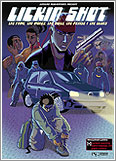
These stories are derived directly from the research process. Teasing out these stories are derived directly from the research process. The unfunded research for ‘Lickin Shot’ – aimed at young black men who get involved in gangs and drug dealing took a year to do. A current funded project aimed at cocaine smokers had involved over 60 interviews with drug users and many more with key people from the community.
We often interview as many people during the production of a publication as an equivalent academic research project; the difference is that our research are designed to be presented to the target audience in the form of a leaflet and not to other academics and policy makers in the form of an academic report.
So the next time somebody asks how we manage to produce our publications, just tell them that we don’t just make ‘em up.
Mike Linnell
*Comments may be shown here |