| |
|
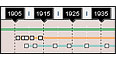
drugs timeline

Lickin Shot:
The serial
Pathways in and out of gang culture
Updated weekly
22 / 28
|
|
| The lifeline project provides help and support for those afflicted by drug and alcohol addiction problems. Drugs/info including cocaine, heroin, crack cocaine, heroin facts, alcohol, health, drug addiction, heroin addiction, drug information, information, help, support, guidance, truth, lifeline, problems. |
|
|
Producing harm reduction guides for people with severe mental illness.
Mark Holland – Consultant Nurse Dual Diagnosis – Manchester Mental Health and Social Care Trust.
Michael Linnell – Director of Communications – Lifeline
Mark – 10 years ago or so, as a community psychiatric nurse I found myselfsearching for information and education materials to give clients (and their carers) who experienced concurrent serious mental illness and who also used street drugs or alcohol (often called a dual diagnosis). I found very little and what existed was pretty weak. The reason my clients used drink or drugs was not very clear, the effect drink or drugs had on them was varied and almost always detrimental, and the response from substance misuse and mental health services was often counterproductive; they tended to pass the client on to other services claiming either the mental illness was the cause of drug use or drug use was the cause of mental illness. Clients got passed from pillar to post, to quote MIND.
As a result of these observations I put together research proposals examining the responses by services to this client group, what types of intervention might work and what information might help them, their carers and practitioners involved in their care.
Eventually, the University of Salford, my local mental health trust and Lifeline agreed to collaborate over a project that would examine all the issues outlined above from a user perspective using a qualitative methodology. Academic and medical ethical approval for the project was received in September 2004. The core of the project was to develop accessible information for service users, a secondary goal was that the information (booklets) would also be read and used by carers and practitioners. The rationale for this was that practitioners and carers were often at a loss as to what was going on anyway, any little would help.
Michael – Eighteen months ago, I found myself sitting in the smoking room of the Intensive Care Unit of a psychiatric hospital about to interview a group of patients. Although one man spent the entire session whispering in my ear in an attempt to persuade me to eat some of the cheese he had in his pockets and another dropped to his knees mid-sentence whenever God spoke to him – it was when an extremely articulate man, in the context of a discussion about the positive aspects of his illness, said, “Do you know how good it feels burning down a £300,000 house?” that I realised, producing harm reduction guides for people with severe mental illness was going to be ‘challenging’.
People who have experienced mental illness should avoid using drugs. This is the standard line inserted into drug information products, and although this statement is undoubtedly true, it is also true that people who have never experienced mental illness should avoid whacking up a groin full of smack or snorting a line of Charlie the length of the District and Circle line. And yet within the drugs industry, with the exception of the most rabid abstentionist, harm reduction is seen as the most effective, pragmatic and humane approach while people are still using. So, why is our approach to people who use drugs and have experienced severe mental illness any different? Are we saying that only sane people should use illegal drugs?
Mark – Any one caring for a person experiencing ‘madness’, be it a ‘moment of’ or sustained, wants to help. You see a patient in hospital, they’re hearing voices that abuse them, they think they are under mortal threat by some entity or other; they’re overwhelmed by distress. If they use drugs you conclude that the episode has been made far worse than usual because they’ve smoked cannabis or used something or other that’s psychoactive in nature, including alcohol. What option is there? One obvious one, ‘just stop using’! It’s clear, stop using and your medication will be more effective and you won’t trigger or worsen episodes of your mental illness.
Fine, but in reality (just like someone who is habitually cutting themselves) abstinence is only feasible after they have worked their way through the alternatives to using (or cutting). Working through the alternatives takes time for a lot of people. For nurses in hospital, and mental health / substance misuse practitioners in community settings, that time can be used to good effect to provide useful information that promotes safer (not safe) substance use. Keeping someone healthy until they stop using is probably the most viable option.
By producing harm reduction booklets for dual diagnosis clients we thought one, clients would be more aware of the mental illness-substance interaction and two, practitioners and carers would be exposed to an approach that offered an alternative to the unrealistic demand of immediate abstinence.
Michael – As an outsider to the psychiatric profession, I was initially very disturbed by the side-effects of anti-psychotic medication (which can cause long term Tardive Dyskinesia). However, after listening to people’s experiences and seeing the risks in context, I changed my mind. Although I approached this project from a harm reduction user centred focus, I was also very clear that we were trying to tell a story from both sides. After speaking to the patients advocate service and as many of the patients had been compulsorily detained, I made some efforts to distance myself from the nursing staff on the ward to maintain an independent perspective. A number of things surprised me – a number didn’t. Some of the drug use was controlled, logical and familiar (to me), some of it far less so i.e. getting ‘the voices’ stoned: deciding to drop a trip when you are in the middle of a psychotic hallucination; smoking rock to chase those ‘big black hairy spiders’ from out of your mouth. That there was a stigma about being a ‘druggie’, even amongst people compulsorily detained in a psychiatric hospital was no real surprise.
Mark – Embarking on this project with an experienced researcher from a reputable (or is that infamous) drugs agency, I was anticipating challenges. Health care is fairly conservative; the NHS today feels more risk aversive than ever. Introducing Lifeline into mainstream psychiatry was going to be exciting. The fact that the first focus groups participants all put their tenner payment each into a kitty for the only patient with unescorted leave to go and score with demonstrated a lot. It showed how organised the most ‘mad’ people can be (these focus groups took place in wards for acutely disturbed patients). It showed how naïve I was, and it confirmed what we suspected; patients would not stop using automatically, a harm reduction approach was definitely the way to go.
Therefore, working with a drugs agency was essential. We needed their expertise on the subject itself, substance use, but also we needed their expertise in reaching particular audiences. This was the first time I had seen a combination of imagery and storylines used as a research tool to reflect research participants experiences. This was clearly an appealing method for the patients who participated in the project too. It generated a lot of engagement with staff and patients. It was evident that patients and staff in mainstream psychiatry were, and will remain, receptive to substance use approaches; it’s simply a case of providing them with some resources. In this modest case that amounts to 4 dual diagnosis information booklets.
Michael – A variety of styles of pencil drawings were used to test style, humour, understanding and interpretation of visual messages. I eventually (and confidently) came up with the idea of a character called ‘Ghost Weed’ a Rastafarian spirit who appeared on the ward every time a group of four patients smoked ‘the magic weed’ (at least half of the respondents in the Intensive Care Unit were black males, hence the black hero/storyteller). After several months’ work, the prototypes were tested on some patients’. . . they didn’t work.
Ghost Weed was too confusing for some people and too simplistic for others. This to put it mildly was disheartening. However, the part of the story in which the patients told there history’s/stories did seem to work well. After struggling with the stories structure for another couple of months’ (the horror of the blank sheet of paper), a pilot was tested and seemed to work.
Mark – The data was collected through numerous focus groups and interviews in day treatment but mainly inpatient psychiatry. Mike produced pictures and story lines for 4 fictitious characters and integrated the vast amount of the participant’s experiences in to the characters lives. The themes in the storylines had to match separate thematic analysis carried out by me. Failure to match them would compromise the validity of the content of the booklets. The experiences had to resonate for participants and therefore later focus groups were used as part of the storyline/themes verification. Amendments in content and format were made as we constantly refined the booklets. Each substantive subject such as relapse prevention in psychosis, homelessness and mental illness, schizophrenia and cannabis use, medication, pharmacological action of street drugs etc had to be reviewed. The content needed to be accurate from both an established evidence base point of view as well as reflective of our participant’s views and experiences.
Once we had satisfied ourselves that the content was sound and true we sought approval from opinion leaders in the field including CSIP (NIMHE). It was critical that mainstream NHS mental health agencies approved of the booklets because our target audience was dually diagnosed clients, most of whom are in the care of specialist mental health NHS trusts and services. It was important also to demonstrate academic rigour and sponsorship.
The booklets ultimately need to reach practitioners who are scratching their heads in the same way I (mark) did 10 years ago. In trying to find information for a troubled client group that will be of therapeutic value to clients and culturally enlightening to services, look no further, the Out of Your Head series is likely to be very beneficial
|